•
5 min read

For years, modern interiors were dominated by icy whites, industrial greys, and ultra-clean finishes. While visually striking, these spaces often lacked emotional warmth.
Today’s homeowners and commercial clients want something different.
They want interiors that feel lived in, personal, tactile, and restorative.
This desire has fuelled the rise of:
• Quiet Luxury — understated elegance over loud opulence
• Biophilic Design — reconnecting interiors with nature
• Sensory Spaces — environments designed to calm and regulate emotions
• Heritage Aesthetics — timeless materials over trend-driven décor
Brown naturally embodies all these movements. It softens architecture. It adds soul to minimalism. It creates emotional depth. More importantly, it feels human.
Brown and the Return to Nature
One of the strongest reasons behind brown’s resurgence is our collective need to reconnect with nature.
Brown reminds us of:
• Raw timber
• Earth and clay
• Natural stone
• Coffee, cocoa, leather, and linen
• Forest landscapes and desert palettes
These associations trigger a subconscious sense of comfort and stability.
This is why brown plays such a central role in biophilic design.
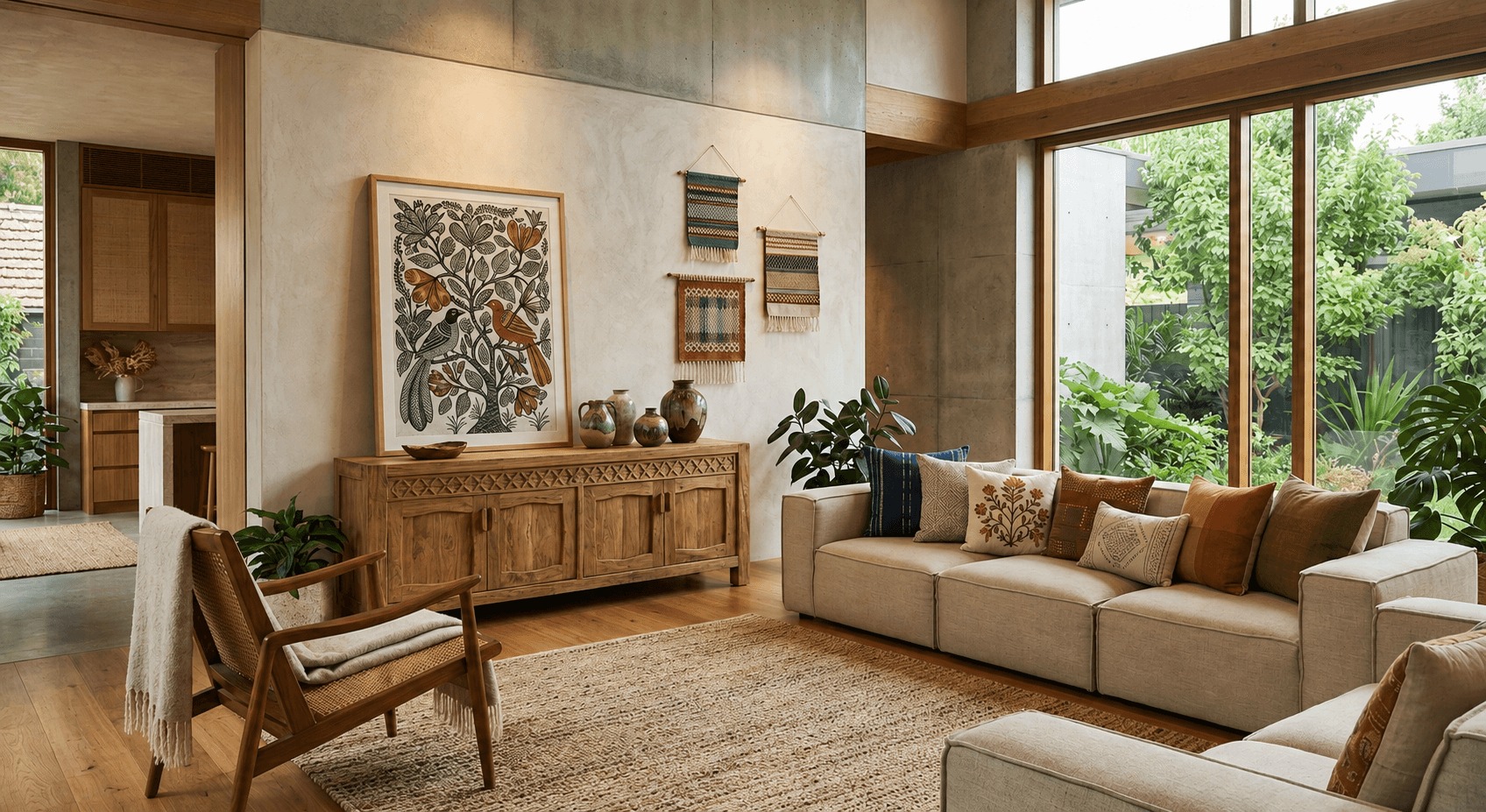
At Xception The Design Studio, we often integrate earthy tones alongside natural textures such as:
• Oak and walnut wood finishes
• Limewash walls
• Handmade ceramics
• Textured fabrics
• Natural lighting concepts
• Indoor greenery
Brown and the Return to Nature
The Psychology of Brown: Why It Feels So Good
Color psychology has become increasingly influential in luxury interior design. And brown carries a unique emotional weight.
Psychologically, brown is associated with:
• Stability
• Security
• Reliability
• Warmth
• Resilience
• Comfort
Unlike colder tones that can feel sterile, brown creates emotional softness. It transforms a room from a visual composition into an experience.
This emotional quality matters now more than ever.
As homes continue to function as offices, retreats, entertainment zones, and wellness spaces, people want interiors that reduce stress and encourage relaxation.
Brown delivers exactly that.
It creates what many designers now call the “cocoon effect” — spaces that feel protective, intimate, and nurturing.
The Rise of Quiet Luxury
One of the defining aesthetics of 2026 is Quiet Luxury.
Unlike flashy maximalism, quiet luxury is about refinement, craftsmanship, materiality, and timeless sophistication. And brown is at the heart of this movement.
Think:
• Rich walnut paneling
• Cognac leather seating
• Espresso-toned kitchens
• Camel bouclé upholstery
• Deep mocha marble accents
• Bronze and brushed gold detailing
These combinations create interiors that feel expensive without appearing excessive.
Brown communicates confidence quietly.
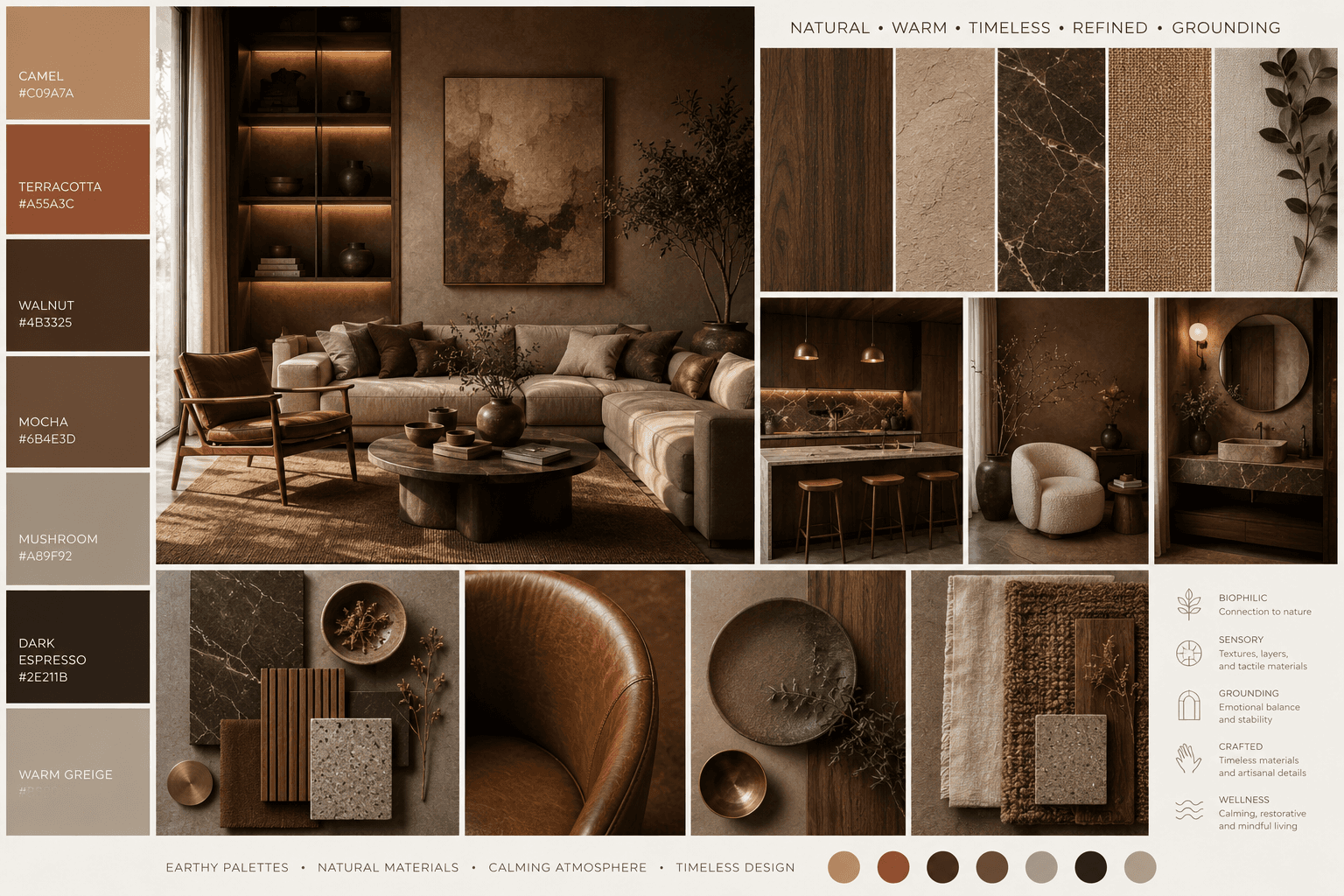
The Most Popular Brown Tones in Modern Interiors
Brown is no longer a single shade category.
Today’s designers are working with layered, nuanced palettes that range from soft neutrals to dramatic dark finishes.
1.Camel & Tan
Light, elegant, and versatile. Perfect for:
• Contemporary living rooms
• Boutique hospitality spaces
• Minimal luxury interiors
• Soft Scandinavian-inspired aesthetics
These shades pair beautifully with cream, linen, travertine, and brushed brass.
2.Terracotta & Rust
Earthy and expressive. Ideal for:
• Mediterranean-inspired interiors
• Bohemian luxury spaces
• Artistic feature walls
• Warm hospitality environments
These tones instantly add depth and character.
3.Espresso & Walnut
Sophisticated and dramatic. Often used in:
• Executive offices
• Luxury residences
• High-end kitchens
• Statement furniture pieces
Dark browns create visual grounding and architectural richness.
4.Mushroom & Greige
The modern neutral.
Perfect for clients transitioning away from cool grey palettes.
These shades provide warmth without overwhelming a space, making them ideal for contemporary homes seeking subtle sophistication.
Why Designers Love Brown in Modern Architecture
Brown is exceptionally versatile. It complements nearly every design language, including:
• Minimalism
• Japandi
• Contemporary luxury
• Organic modernism
• Mid-century modern
• Industrial chic
• Wabi-sabi interiors
It also works beautifully across materials.
Brown enhances:
• Marble
• Concrete
• Matte black finishes
• Glass
• Brass and bronze metals
• Textured fabrics
• Natural wood grains
Rather than overpowering a room, brown creates a sophisticated canvas that allows textures, lighting, and architectural details to shine.
Brown in Commercial & Hospitality Design
The trend is not limited to homes.
Luxury hotels, executive lounges, premium cafés, wellness clinics, and retail environments are increasingly embracing warm brown palettes.
Why? Because brown influences perception.
Spaces designed with earthy tones often feel:
• More premium
• More welcoming
• More trustworthy
• More intimate
• More experiential
This is especially important in hospitality and workspace design, where atmosphere directly affects customer experience and emotional engagement.
Sustainability and the Rise of Earth-Toned Interiors
Brown also aligns beautifully with the growing emphasis on sustainable design.
As the industry shifts toward conscious material choices and long-lasting interiors, earthy palettes feel increasingly relevant.
Natural finishes age gracefully. Wood develops character. Leather gains patina. Stone becomes richer over time. Unlike trend-heavy colors that quickly feel outdated, brown evolves beautifully with age.
This makes it a sustainable aesthetic choice—not just environmentally, but emotionally and financially.
Timeless interiors reduce the need for constant redesign. And timelessness is becoming the ultimate luxury.
How We Use Brown at Xception The Design Studio
At Xception The Design Studio, we approach brown not as a single color, but as a layered experience.
Our design philosophy focuses on creating interiors that feel:
• Elevated yet comfortable
• Luxurious yet natural
• Contemporary yet timeless
We often combine brown tones with:
• Soft ambient lighting
• Textural layering
• Organic materials
• Sculptural furniture
• Statement stone surfaces
• Bespoke wood detailing
To create spaces that feel emotionally connected to the people who inhabit them.
Final Thoughts: Brown Is More Than a Trend
Brown’s resurgence represents a larger cultural shift.
People are moving away from spaces designed purely for aesthetics and embracing interiors designed for experience, emotion, and longevity.
Brown answers this moment perfectly.
It is grounding. It is luxurious. It is timeless. It is deeply human.
Whether through warm walnut finishes, earthy plaster walls, or rich mocha textiles, brown brings depth and authenticity into modern spaces in a way few colors can.
And in a world constantly chasing the next trend, authenticity never goes out of style.
More Insights