•
5 min read
In an era of instant digital gratification and AI-generated "perfect" rooms, the soul of interior design can sometimes feel like it’s being squeezed out of the process. At Xception, we’ve spent three decades navigating the shift from hand-drafted blueprints to virtual reality, yet the most profound lessons we’ve learned have nothing to do with technology.
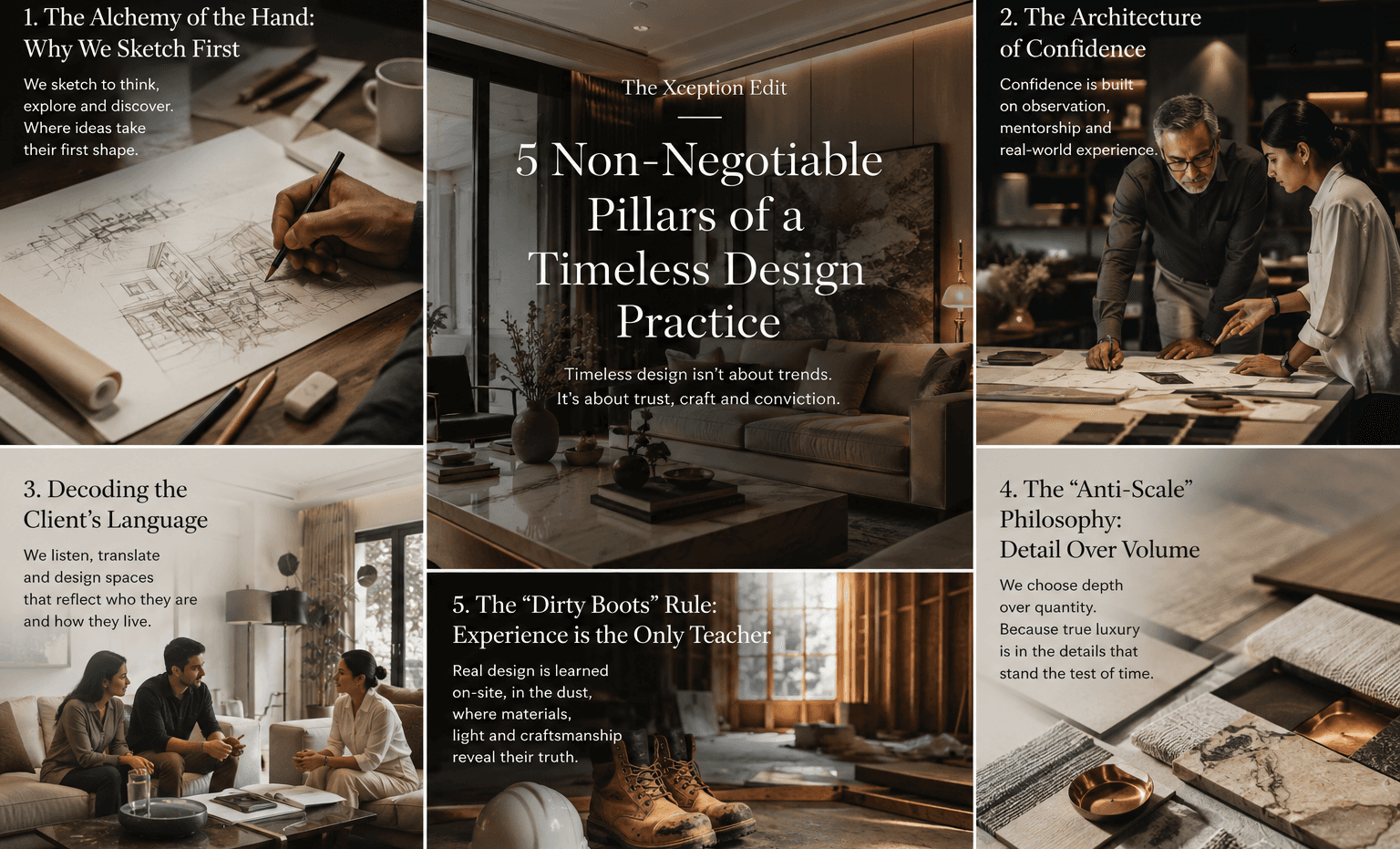
As we look toward the future of "lived-in luxury," we’re returning to the fundamental truths that define a legacy-built design studio. Whether you are a client looking to understand the "why" behind our process, or a fellow creator finding your footing, these are the five pillars that keep our work intentional, sustainable, and—above all—human.
1. The Alchemy of the Hand: Why We Sketch First
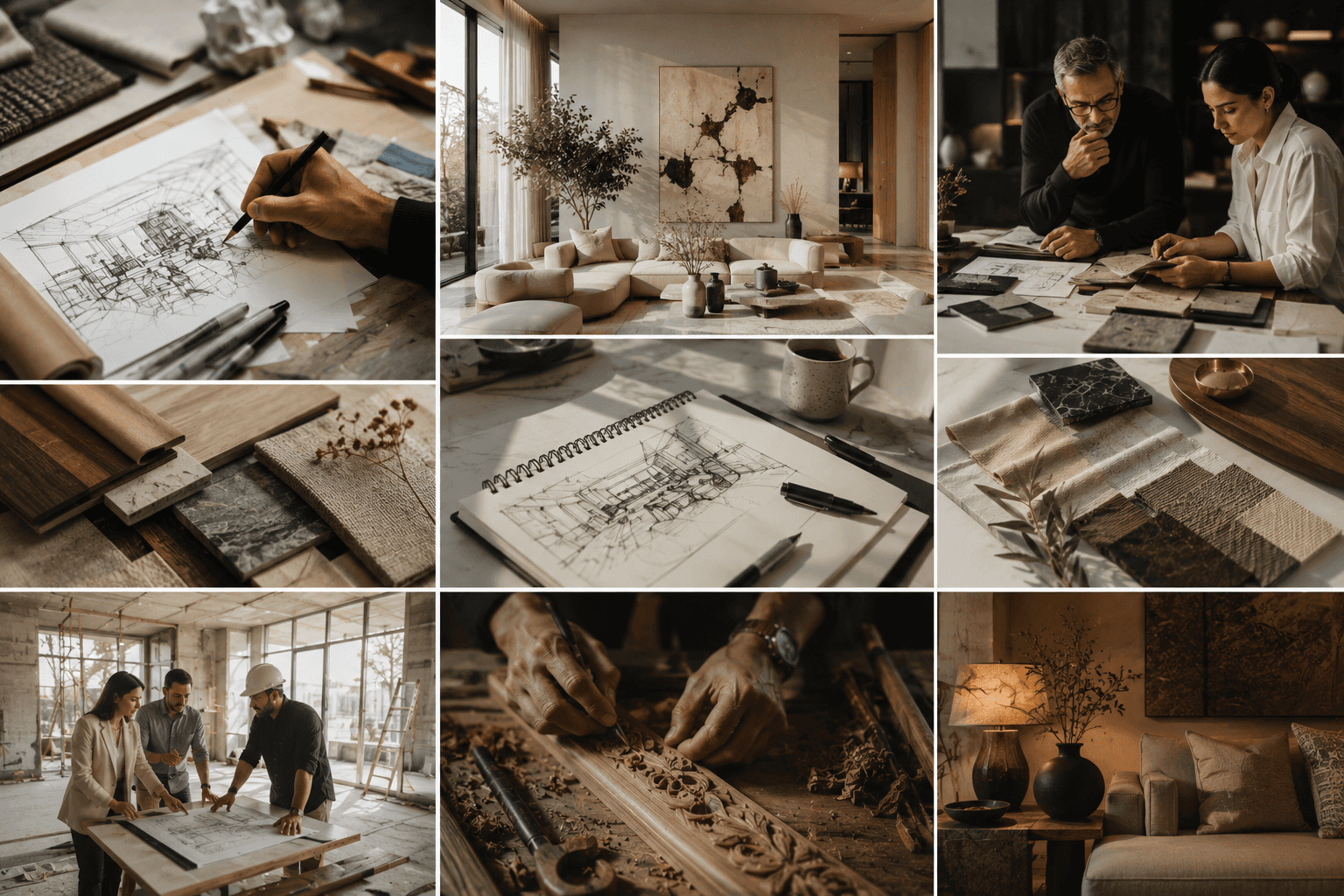
Software is a magnificent tool for precision, but it is a poor tool for discovery. At the start of any Xception project, you won’t find us at a keyboard; you’ll find us with a roll of trace paper and a 6B pencil.
Drawings don't need to be beautiful; they need to be self-explanatory. A sketch is the fastest path from a brainwave to a structural solution. It allows us to play with the "flora and fauna" of a space—the organic flow that a computer often sanitizes. When we sketch, we aren't just drawing a room; we are solving a human puzzle. By the time we move to software, the "soul" of the design is already locked in.
2. The Architecture of Confidence
One of the greatest misconceptions in our industry is that you are born with the "eye" and the "voice" to lead a project. In reality, confidence is a learned behavior.
In the early years of a design career, the most important work happens with your ears and eyes, not your mouse. It’s about watching how a Principal Designer handles a site crisis or how they gently steer a client away from a trend that won't age well. We believe in mentorship because we know that the "Xception standard" isn't found in a manual—it’s absorbed on-site, through decades of seeing how materials behave in the real world.
3. Decoding the Client’s Language
As designers, we are often guilty of falling in love with our own vocabulary. We talk about biophilic integration, spatial rhythm, and tonal hierarchies. But here is the hard truth: Design alone won’t win the room.
To our clients, a project isn't a portfolio piece; it’s their sanctuary, their heritage, or their professional image. We have learned that our job is to be translators. We must take the abstract beauty of a design and prove why it is functionally right for the person living in it. If we can’t explain how a "lived-in luxury" aesthetic improves their daily quality of life, the design hasn't truly succeeded.
4.The "Anti-Scale" Philosophy: Detail Over Volume
In the business of design, there is a constant temptation to grow—to take on more projects, more staff, and more noise. But at Xception, we’ve learned that growth for growth’s sake is a trap.
Scale often comes at the direct cost of detail, creativity, and that holistic, "hand-touched" feeling that makes a home special. We choose to remain intentional about our volume. Why? Because a finished project is our best PR. The most powerful lead generator isn't a sponsored ad; it’s the way a guest feels when they walk into a home we finished three years ago and realize it still feels timeless, sustainable, and perfectly executed.
5.The "Dirty Boots" Rule: Experience is the Only Teacher
You can graduate with honors and master every rendering program on the market, but you aren't a designer until you’ve stood in the dust of a construction site. There is no substitute for real-world practice.
Understanding how light hits a specific teak finish at noon versus 4:00 PM, or knowing how a craftsman’s hand-embroidery will actually sit on a textile, only comes from being present. We believe in getting our hands dirty. It’s the gap between the "perfect" digital image and the "imperfect" physical world where true luxury is found.
The Xception Perspective
Design is more than just a service; it’s a 30-year conversation between the past and the future. By prioritizing the sketch over the screen, the client over the ego, and the detail over the scale, we ensure that every project we touch isn't just a space—it’s an Xception.
How do you define luxury in your own home? Is it the look, or the feeling of the details?
More Insights